
call 800-291-1732 (Who Answers?) for a free referral.
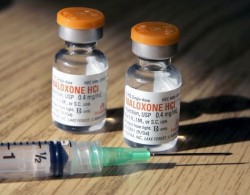
Naloxone is sometimes used to help people recover from an overdose on codeine.
While not as strong as heroin or morphine, large enough doses of codeine can bring similar “high” effects. Not surprisingly, codeine, heroin and morphine all belong to the same class of drugs known as opiates.
Codeine’s classification as a prescription medication likewise places it within the Schedule II class of narcotics drugs. These characteristics make codeine a dangerous recreational drug that carries a high potential for overdose.
A codeine overdose event can be life threatening, especially when needed medical care is lacking. Signs of overdose must be met with immediate medical attention. Whether on the spot or in the emergency room, codeine overdose treatment can be a traumatic experience to say the least.
Codeine Overdose Effects
Easy access to codeine-based drugs makes it that much easier for interested parties to abuse the drug. Intended as a prescription pain medication, taking large amounts of codeine can quickly shut down major, life-sustaining bodily functions. Though intended as a long-acting drug, snorting and injecting practices further increase the likelihood of an overdose event.
According to the U. S. National Library of Medicine, symptoms of codeine overdose include:
- Muscle spasms
- Dizziness
- Shallow breathing
- Labored breathing
- Nausea/vomiting
- Stomach cramps
- Seizures
- Blue lips and/or fingertips
Once these symptoms appear, getting needed medical help is critical to surviving codeine overdose.
Codeine Overdose Treatments
Whenever a codeine overdose occurs, a person has ingested more of the drug than the body can metabolize. Considering opiates in general slowdown digestive processes, it’s only a matter of time before avid codeine users experience an overdose event.
Codeine overdose treatments work to flush out all traces of the drug from the system while at the same time keeping the person alive. In cases where a person actually stops breathing, a drug known as naloxone is administered to reverse codeine’s effects. Naloxone essentially flushes all traces of codeine from the system. Because of the increasing rates of opiate overdose, emergency responders have started to carry naloxone doses as standard procedure.
Emergency Room Procedures
Like any other opiate, codeine depresses or slows central nervous system functions, which accounts for its ability to reduce pain sensations. In excess amounts, central nervous systems functions can actually shut down one by one.
Depending on the types of symptoms a person exhibits, emergency room procedures for treating codeine overdose include:
- Vital signs checks
- Ingesting activated charcoal
- Breathing supports when needed
- Administer IV fluids
- Gastric lavage to empty stomach contents
- Administer laxatives
Aftercare
As codeine ingredients often exist alongside other medications like acetaminophen, ongoing treatment may be needed to address conditions resulting from added ingredients. Other co-existing problems with a person’s mental or physical health may also require further treatment.
In some cases, aftercare treatment for codeine overdose may also warrant a psychological evaluation to determine a person’s mental state when using drugs. People with existing physical and/or mental conditions may be advised to seek inpatient treatment to reduce the odds of another overdose episode from occurring.
Ultimately, once a person survives an overdose, the chance of overdosing in the near future increases substantially.
 Medications Used in Codeine Addiction Treatment -
Various forms of pharmacotherapy have evolved to assist in the treatment of opiate addiction. According to The Development of Medications for the Treatment of Opiate and Cocaine Addictions, and in recognition of the need to improve availability of medications that can be used in the treatment of drug addiction, the Anti-Drug Abuse Act of 1988 ...
Medications Used in Codeine Addiction Treatment -
Various forms of pharmacotherapy have evolved to assist in the treatment of opiate addiction. According to The Development of Medications for the Treatment of Opiate and Cocaine Addictions, and in recognition of the need to improve availability of medications that can be used in the treatment of drug addiction, the Anti-Drug Abuse Act of 1988 ...  Codeine Addiction Treatment -
Codeine is a legally prescribed narcotic that has a high potential for abuse and for subsequent addiction. Many people underestimate how dangerous this medication is and how addictive it really can be. Once addiction sets in, the decision to quit may be hindered by withdrawal symptoms that make it difficult to say no to the drug. Codeine addiction ...
Codeine Addiction Treatment -
Codeine is a legally prescribed narcotic that has a high potential for abuse and for subsequent addiction. Many people underestimate how dangerous this medication is and how addictive it really can be. Once addiction sets in, the decision to quit may be hindered by withdrawal symptoms that make it difficult to say no to the drug. Codeine addiction ...  How to Choose a Codeine Addiction Treatment -
Codeine, commonly used to treat mild to moderate pain symptoms, belongs to the same class of drugs as morphine, heroin and opium. Highly addictive and habit-forming, the long-term use of codeine places users at considerable risk of addiction. As a pain management treatment, codeine works well at keeping pain symptoms in check, though its effects ...
How to Choose a Codeine Addiction Treatment -
Codeine, commonly used to treat mild to moderate pain symptoms, belongs to the same class of drugs as morphine, heroin and opium. Highly addictive and habit-forming, the long-term use of codeine places users at considerable risk of addiction. As a pain management treatment, codeine works well at keeping pain symptoms in check, though its effects ...  What Does Detox During Lortab Addiction Treatment Look Like? -
A professional detox program has staff trained to support and treat patients experiencing Lortab withdrawal so that they can be as comfortable as possible.
What Does Detox During Lortab Addiction Treatment Look Like? -
A professional detox program has staff trained to support and treat patients experiencing Lortab withdrawal so that they can be as comfortable as possible.