
call 800-291-1732 (Who Answers?) for a free referral.
As stated by the FDA, “Suboxone is a prescription medicine used to treat adults who are addicted to (dependent on) opioid drugs… as part of a complete treatment program that also includes counseling and behavioral therapy.” Suboxone can be used to treat addiction to illicit opioids like heroin and also to treat prescription opioid addiction. There are many benefits to using Suboxone as a codeine addiction treatment.
Minimizing Withdrawal, Cravings
Suboxone works in much the same way as methadone to minimize the withdrawal symptoms caused by stopping codeine abuse and the cravings that individuals feel for the drug. Suboxone contains buprenorphine, “a partial opioid agonist (i.e., it has agonist and antagonist properties)” (NIDA). Once the symptoms caused by quitting codeine are reduced, it is easier for patients to live their lives as they withdraw from the drug.
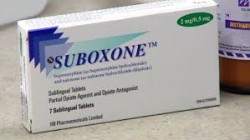
Suboxone works to alleviate the symptoms of withdrawal.
Patients are go through three phases with Suboxone: the induction phase, the stabilization phase, and the maintenance phase. Once the individual has been stabilized on the drug and is moved into the maintenance phase, they can conceivably stay on Suboxone for as long as necessary before they are taken off the drug by having a physician slowly taper the amount.
Safe from Abuse
Suboxone, unlike methadone, actually has a safeguard that keeps it from being abused as easily or as often. According to the NLM, “In the United States, the most commonly abused opioids are heroin and methadone.” It is difficult to avoid the possibility of methadone abuse because high enough doses will cause intoxication and euphoria; this is why methadone must be distributed at specialized clinics.
Suboxone contains naloxone, a full opioid antagonist, that helps protect the drug from abuse. When a person crushes the tablet in order to snort it or inject it, the naloxone in the drug precipitates withdrawal and causes the individual to feel all the symptoms immediately. This prevents users from abusing the drug as easily as they might abuse methadone.
Available at Doctors’ Offices
According to the FDA, Suboxone, and the buprenorphine-only brand drug Subutex, “are the first narcotic drugs available under the Drug Abuse Treatment Act (DATA) for 2000 for the treatment of opiate dependence that can be prescribed in a doctor’s office.” These medications are safer than methadone so they do not need to be dispensed by a specific type of clinic. That means Suboxone:
- Is easier to obtain
- Does not require the long wait times that methadone often does
- Can be prescribed to more individuals who need it
“Only qualified doctors with the necessary DEA (Drug Enforcement Agency) identification number are able to start in-office treatment and provide prescriptions for ongoing medication.” But, if you do not have a methadone clinic near you, there is likely a doctor who can prescribe the medication in your area. In addition, you will often be given the drugs to administer at home, unlike methadone.
Suboxone is easier to obtain and safer than methadone in many ways. And, especially because many individuals who become addicted to codeine require a short withdrawal and treatment period (unlike those who need long-term maintenance for heroin abuse), Suboxone is a very beneficial treatment for this addiction syndrome.
 Methadone Treatment in Codeine Rehab -
For those dealing with codeine addiction, methadone treatment may be a perfect solution. Depending on your treatment needs, you may choose a clinic which provides methadone treatment to wean you off of the abuse of codeine. There are benefits and drawbacks to methadone treatment, so consider whether or not it fits your needs before seeking ...
Methadone Treatment in Codeine Rehab -
For those dealing with codeine addiction, methadone treatment may be a perfect solution. Depending on your treatment needs, you may choose a clinic which provides methadone treatment to wean you off of the abuse of codeine. There are benefits and drawbacks to methadone treatment, so consider whether or not it fits your needs before seeking ...  Opiate Addiction Treatment May Prevent Overdose -
The appropriate treatment can help prevent an opiate overdose and lead you down the path to recovery.
Opiate Addiction Treatment May Prevent Overdose -
The appropriate treatment can help prevent an opiate overdose and lead you down the path to recovery.  Treatment Methods for Codeine Withdrawal Symptoms -
Codeine withdrawal symptoms can be as distressing as heroin withdrawals if the person has been using high amounts of codeine regularly. Both drugs are opiate narcotics that produce the effects of euphoria and sedation which increases their abuse and dependency potentials. The only real difference is that heroin is illegal and synthesized in a way ...
Treatment Methods for Codeine Withdrawal Symptoms -
Codeine withdrawal symptoms can be as distressing as heroin withdrawals if the person has been using high amounts of codeine regularly. Both drugs are opiate narcotics that produce the effects of euphoria and sedation which increases their abuse and dependency potentials. The only real difference is that heroin is illegal and synthesized in a way ...  Top 5 Considerations to Make when Choosing Codeine Addiction Treatment -
When you are choosing a codeine addiction treatment, there are many considerations you will need to make. However, there are five very important choices you need to make and discussions you will need to have before you find the treatment option that is best for you. Inpatient vs. Outpatient Care Before you choose a treatment ...
Top 5 Considerations to Make when Choosing Codeine Addiction Treatment -
When you are choosing a codeine addiction treatment, there are many considerations you will need to make. However, there are five very important choices you need to make and discussions you will need to have before you find the treatment option that is best for you. Inpatient vs. Outpatient Care Before you choose a treatment ...  Methadone Treatment in Codeine Rehab -
Codeine, a potent opioid drug, can become addictive when abused over a long period of time. For any type of opioid drug addiction, methadone treatment is a viable option. Depending on the severity of your codeine addiction, you may want to choose methadone as a part of your overall codeine rehab treatment program. Methadone as ...
Methadone Treatment in Codeine Rehab -
Codeine, a potent opioid drug, can become addictive when abused over a long period of time. For any type of opioid drug addiction, methadone treatment is a viable option. Depending on the severity of your codeine addiction, you may want to choose methadone as a part of your overall codeine rehab treatment program. Methadone as ...