
call 800-291-1732 (Who Answers?) for a free referral.
Codeine is an opioid drug with psychoactive properties that can lead to addiction. Codeine is prescribed for treatment of mild to moderate pain and coughs. Codeine, in its purest form can be extracted from opium, but most codeine contained in medications is derived from the more potent opiate alkaloid, morphine.
Types of Codeine Medications
- According to the DEA drug schedule:
- Pure codeine with an equivalency of more than 90 milligrams per dose is a Schedule II controlled substance meaning it has a high potential for abuse and dependency.
- Schedule III codeine drugs have a mild to moderate dependency potential when they contain less than 90 milligrams per dosage unit. Many codeine painkiller and cough syrups are included in this category.
- Schedule V for cough syrups containing less than 200 milligrams of codeine or per 100 milliliters. These codeine drugs have very low potentials for abuse and dependency and some of them may be prescribed to children.
What Causes Codeine Addiction?
When people use codeine over an extended amount of time or in excessive amounts, they develop a tolerance to the opioid effects. By increasing the dosages and continuing to use codeine, eventually, the person will develop physical and psychological dependencies which will cause them to suffer withdrawals when they suddenly reduce or stop using the codeine.
It is not uncommon for a codeine dependent person to continue using in an effort to avoid withdrawals because they can be painful and unpleasant. When compulsive use takes over, despite any negative consequences, the person is considered addicted to codeine.
Signs of Codeine Addiction
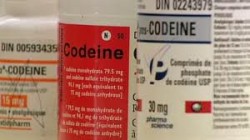
If you cannot control your intake of codeine you may be addicted.
- Tolerance and dependence – Dependency makes the person feel normal only when they are under the influence of codeine and without it they suffer withdrawals.
- Withdrawals – Withdrawals can be similar to the flu and are marked with nausea, muscle pain, cravings, anxiety, agitation, restlessness, chills, fever, and changes in respiration or heart rate. In chronic abuse, the symptoms may be worse.
- Preoccupation with getting more codeine – Codeine affects the way the person thinks and behaves. Opioids are notorious for causing people to obsess over the next dose, which intensifies with every use.
- Behavioral changes – Abnormal behaviors of agitation, insomnia, anxiety, depression, agitation, and mood swings are all a part of the ups and downs of codeine addiction. Other behaviors can be more harmful such as lying, stealing, or fraudulently obtaining codeine. When these behaviors cause negative impacts at home, work, school, or other social environments and the person continues their use, it is a classical sign of addiction.
- Compulsive usage – Abusing codeine even when you know you shouldn’t is abusive and a primary indicator that you are addicted to codeine.
 Codeine Street Names -
Codeine is an opiate modification that is prescribed by doctors for ailments that include minor to serious pain, chronic diarrhea, persistent cough and many others. Codeine is also one of the most widely abused drugs among young people due to the euphoric feeling it causes. It has also been highly publicized that popular rap artist ...
Codeine Street Names -
Codeine is an opiate modification that is prescribed by doctors for ailments that include minor to serious pain, chronic diarrhea, persistent cough and many others. Codeine is also one of the most widely abused drugs among young people due to the euphoric feeling it causes. It has also been highly publicized that popular rap artist ...  Signs of Codeine Addiction -
Codeine is a relatively weak narcotic that is commonly prescribed for the treatment of mild pain associated with injury, medical illness or routine dental treatments. The active ingredients in codeine are similar to those in other narcotics and include opiates that have been derived and synthesized from the opium poppy. The drug is not one of the ...
Signs of Codeine Addiction -
Codeine is a relatively weak narcotic that is commonly prescribed for the treatment of mild pain associated with injury, medical illness or routine dental treatments. The active ingredients in codeine are similar to those in other narcotics and include opiates that have been derived and synthesized from the opium poppy. The drug is not one of the ...  4 Dangerous Truths About Cough Syrup Addiction -
Codeine cough syrup can cause addiction in the same ways other opioid drugs can. While many people who drink cough syrup recreationally see it as an effective way to get high that does no real damage, the abuse of this substance is incredibly dangerous and can lead to even more issues, especially once the individual ...
4 Dangerous Truths About Cough Syrup Addiction -
Codeine cough syrup can cause addiction in the same ways other opioid drugs can. While many people who drink cough syrup recreationally see it as an effective way to get high that does no real damage, the abuse of this substance is incredibly dangerous and can lead to even more issues, especially once the individual ...  Telltale Codeine Addiction Symptoms -
As a main ingredient in cough suppressants and various prescription pain meds, codeine works best at treating persistent coughs as well as most any type of pain symptom. According to the U. S. Food & Drug Administration, codeine can be formulated to produce a range of different effects, which accounts for its being one of ...
Telltale Codeine Addiction Symptoms -
As a main ingredient in cough suppressants and various prescription pain meds, codeine works best at treating persistent coughs as well as most any type of pain symptom. According to the U. S. Food & Drug Administration, codeine can be formulated to produce a range of different effects, which accounts for its being one of ...  Getting Treatment for Pain After Codeine Addiction -
Opiates, such as morphine, oxycodone and hydrocodone are commonly prescribed to people who suffer from chronic pain or a lingering pain following injury or surgical procedure. These drugs are prescribed without even thinking twice in most cases but what about those who are in recovery from codeine addiction – how is pain properly treated in those ...
Getting Treatment for Pain After Codeine Addiction -
Opiates, such as morphine, oxycodone and hydrocodone are commonly prescribed to people who suffer from chronic pain or a lingering pain following injury or surgical procedure. These drugs are prescribed without even thinking twice in most cases but what about those who are in recovery from codeine addiction – how is pain properly treated in those ...